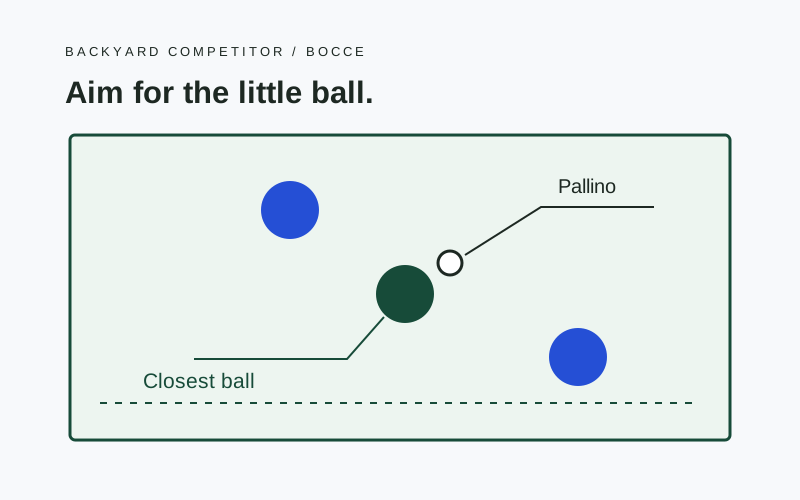
How a frame works
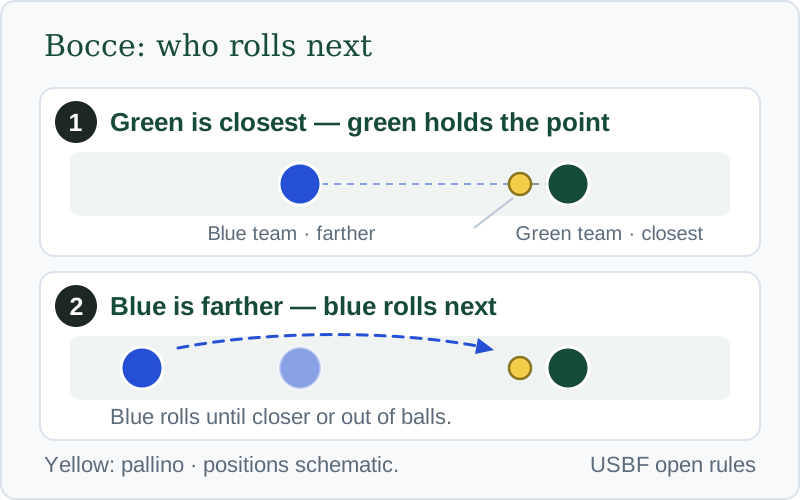
One side throws the pallino to start the frame, then throws the first ball. From there, the side that is not closest to the pallino throws until it takes the lead or runs out of balls, which keeps the trailing side under pressure and is the core rhythm of the game.
Once all balls are played, the frame is scored. Only one side scores per frame, earning a point for each of its balls closer to the pallino than the opponent's nearest ball.
| Element | Casual play | Federation play | Notes |
|---|---|---|---|
| Playing area | Any flat area with agreed bounds | Bounded court to published dimensions | See USBF rules for current figures |
| Pallino | Thrown to start the frame | Thrown within specified limits | Target ball for the frame |
| Throwing order | Side not closest throws next | Same principle | Core rhythm of the game |
| Scoring | 1 point per ball closer than opponent's best | Same | Only one side scores per frame |
| Game target | Agreed before play, often 12 or 13 | Specified by the rule set | Confirm before starting |
| Equipment | Recreational sets, often lighter | Specified ball size and weight | Standards differ between rule sets |
Scoring and game length
Only balls closer to the pallino than the opponent’s nearest ball score, so one frame can award between one and four points. A well-placed defensive ball can limit the opponent’s scoring.
Target scores differ between rule sets and formats, with games commonly played to 12 or 13 points. Agree on the target before starting, and consult the USBF rules if you are playing under federation conditions, since the target and format are specified there.
Shots you need
The two basic shots are the roll, which approaches the pallino along the ground, and the hit, which drives at an opponent's ball or the pallino to move it. A stronger hit clears the area; a softer one takes the position.
Surface reading matters more in bocce than in most yard games. A ball rolling 30 feet is affected by every slope and every soft patch, which is why formal play uses a prepared court.
Casual versus court play
Backyard bocce works on grass, packed dirt, or sand with agreed boundaries, and needs no fixed dimensions. That flexibility is why it suits yards where a fixed-length game will not fit.
Regulation play uses a bounded court with specified dimensions and ball standards. Those figures are set out in the USBF rules, and they differ between open and international standards, so check the current published document rather than a general summary.
The bocce library
Bocce Rules: Open Bocce Scoring, Turn Order, and Dead Balls
How open bocce works: eight balls and a pallino, whose turn it is, how the closest ball is measured, and when a ball is dead, using the USBF open rules as the reference point.
Read the guide ↗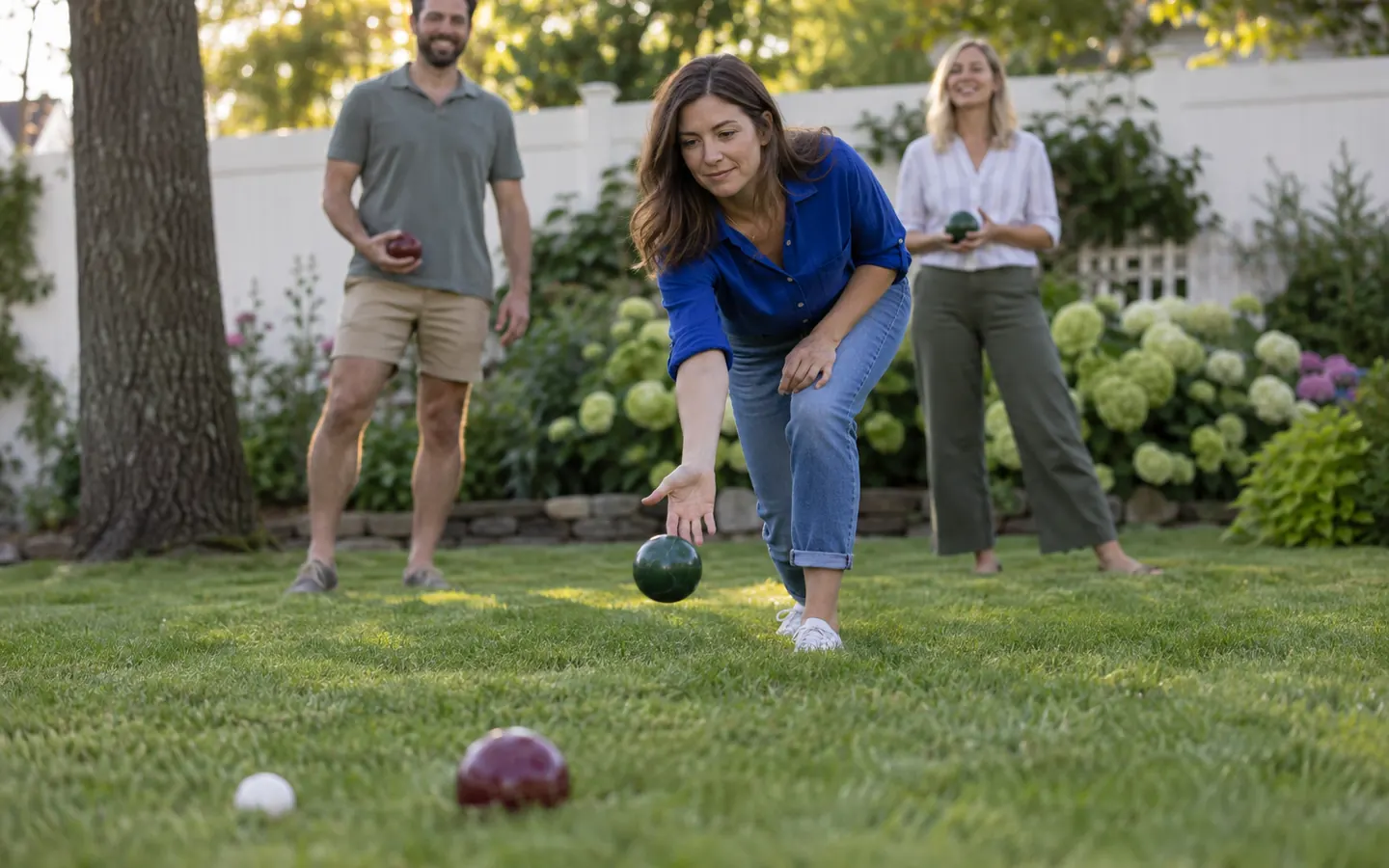
How to Play Bocce: A First Game Walkthrough
A beginner walkthrough for a first bocce game: the eight balls and the pallino, the core idea in two sentences, the order of play, and how to adapt everything to an ordinary lawn.
Read the guide ↗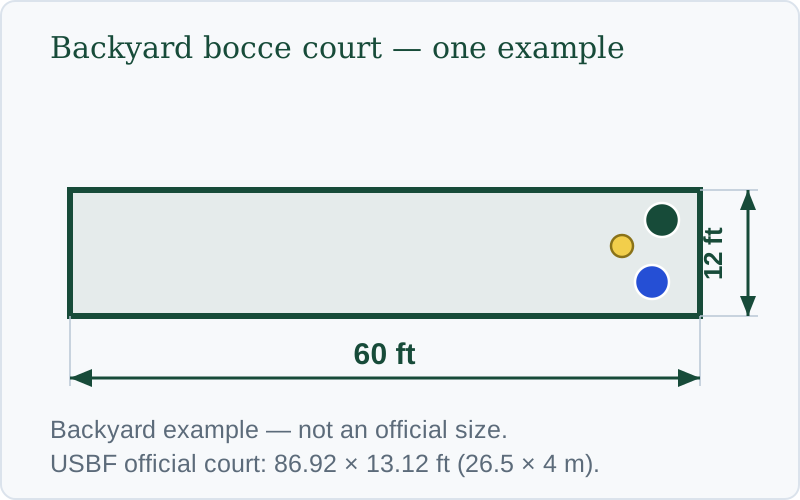
Bocce Court Dimensions: Official Figures and Backyard Planning
The USBF open bocce court figure, why there is no single universal bocce court size, and how to plan a smaller backyard court without describing it as regulation.
Read the guide ↗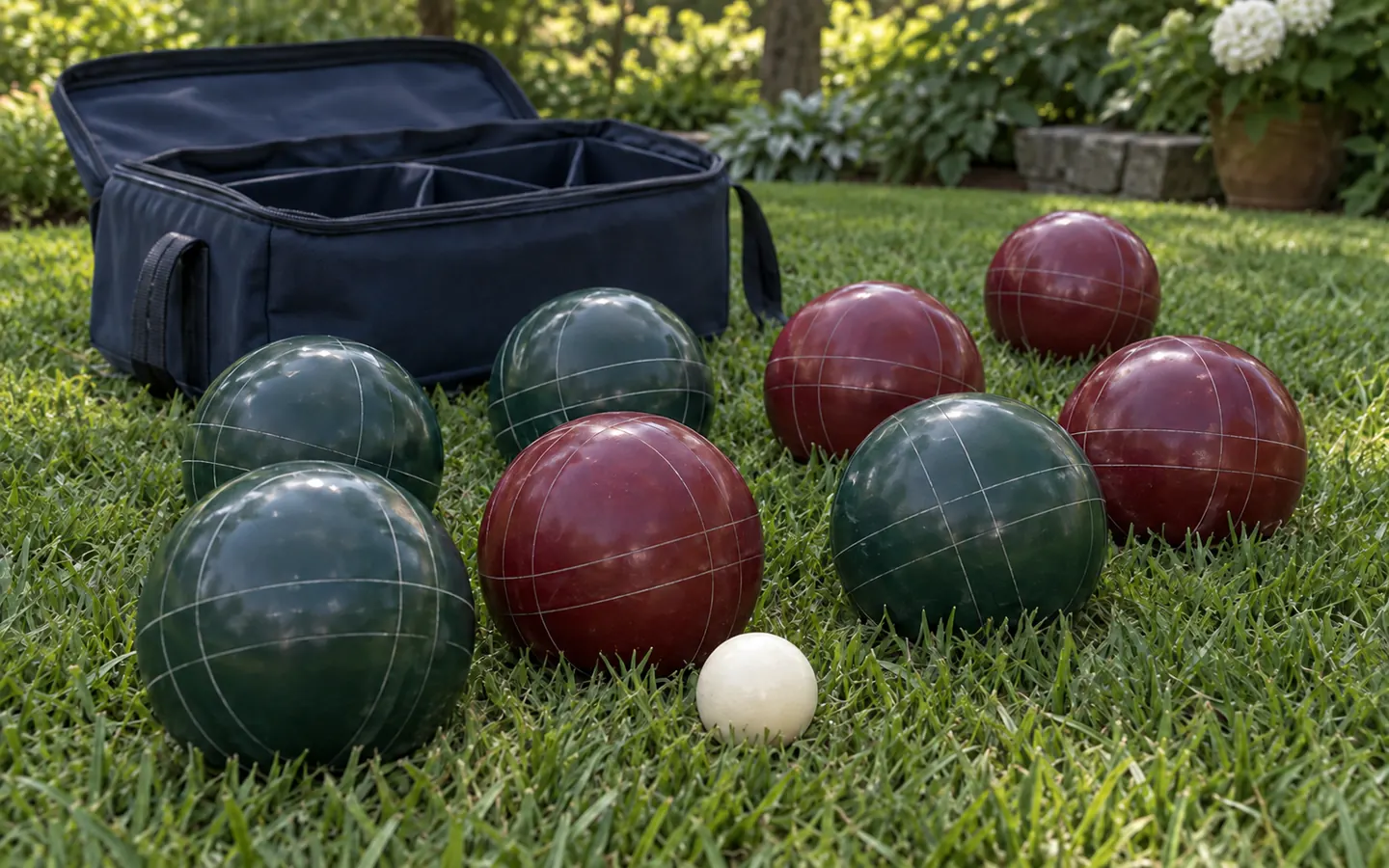
Choosing a Bocce Set: Sizes, Materials, and What to Check
A neutral guide to choosing a bocce set: resin against hollow plastic and water-filled balls, published diameters and weights, and how portability trades against how the set rolls.
Read the guide ↗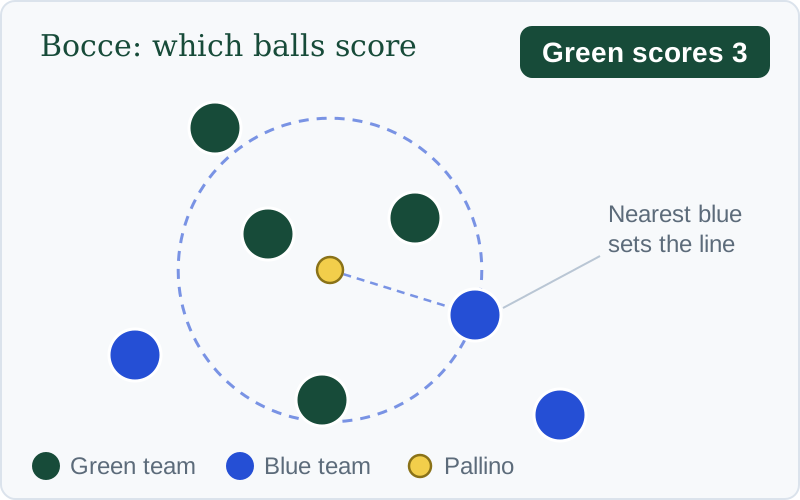
Bocce Scoring: Worked One, Two and Three Point Ends
How bocce scoring works in practice, with a full eight-ball end measured out, plus what happens on a tie and who throws the pallino to start the next end.
Read the guide ↗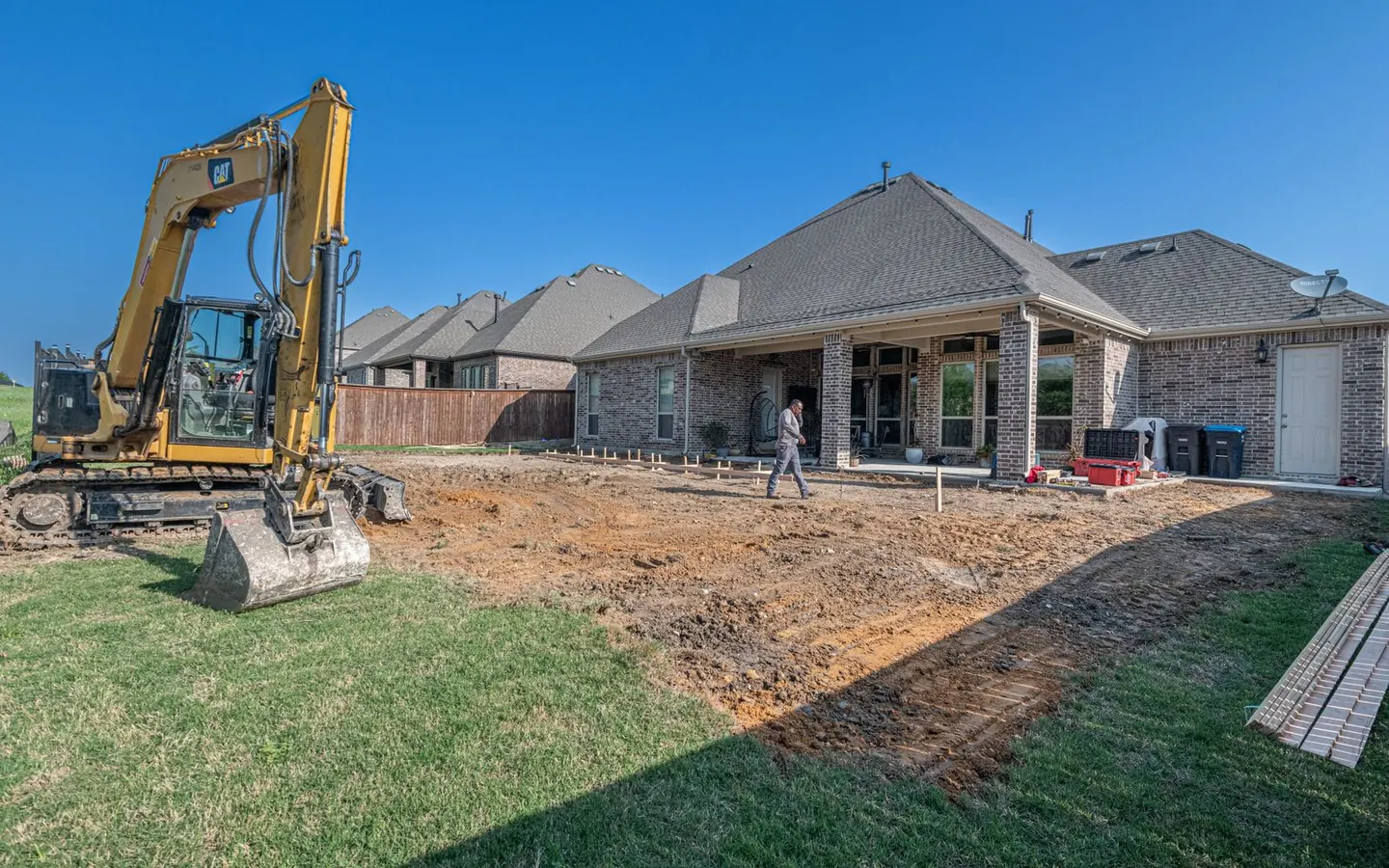
Building a Bocce Court: A Site and Design Checklist
A planning checklist for a backyard bocce court covering site assessment, drainage, a permeable subbase, edging and surfacing options, and ongoing maintenance.
Read the guide ↗How to Make a Free Tournament Bracket (In Under a Minute)
See how to enter teams, create a single-elimination bracket and share the editable link in Sport Scheduler Pro.
A few common questions
How many points is a bocce frame worth?
One point for each ball a side has closer to the pallino than the opponent's nearest ball. Many frames are worth a single point.
Do I need a court to play bocce?
No. Casual play works on any reasonably flat area with agreed boundaries. Federation competition uses a bounded court built to the published specifications.
Put your bocce group on the schedule.
Sport Scheduler Pro builds single-elimination tournament brackets and round-robin league schedules. Set your teams and format before the first game.