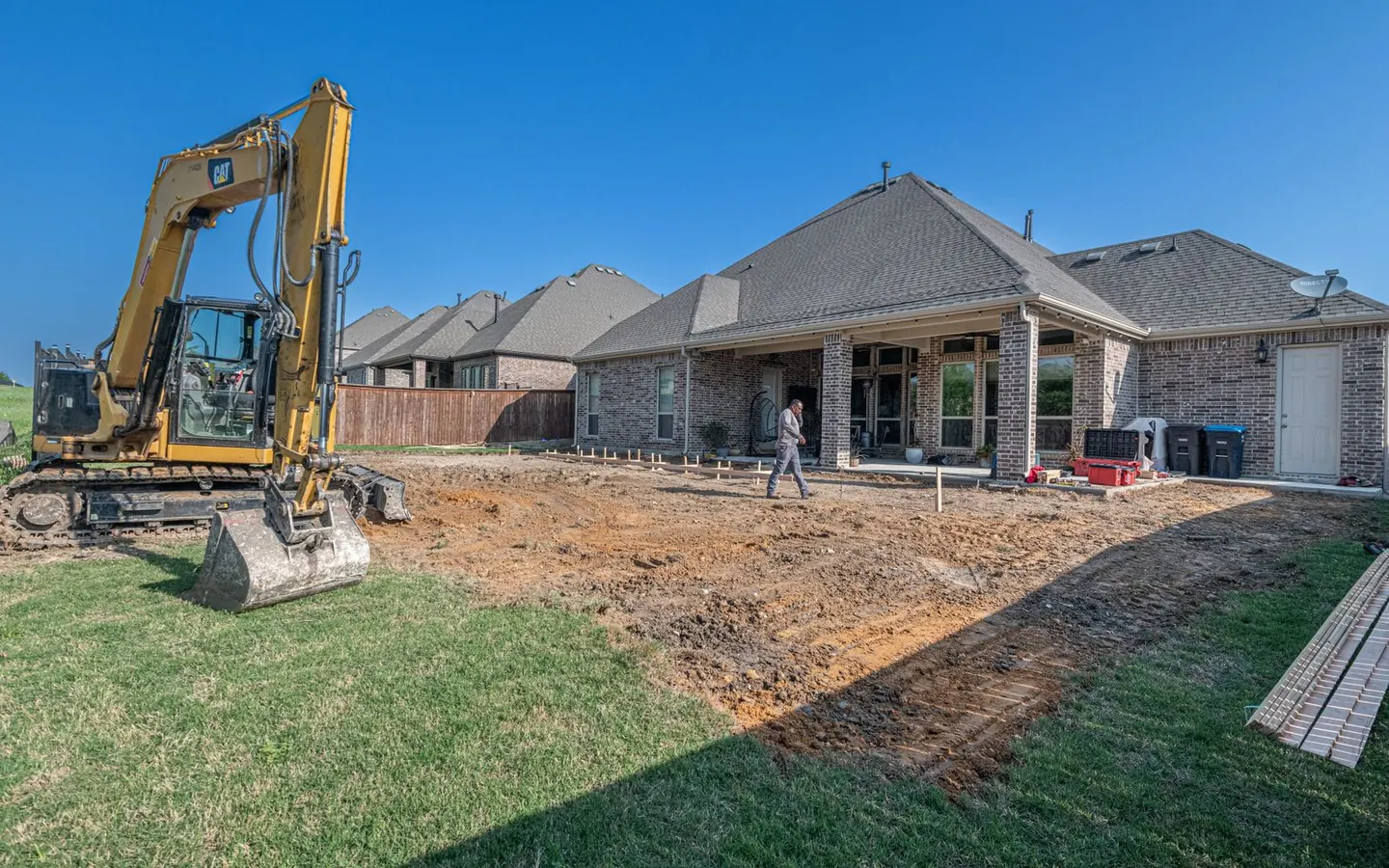
What this page does and does not give you
There are no build costs, no build times and no universal excavation depths here, because none of those can be stated honestly without knowing your soil, your climate and your local code. Frost depth, soil percolation, aggregate availability, permit requirements and utility locations all change the numbers, and they change them by a lot. Treat every line below as a question to answer on site with a local contractor or supplier.
The one dimension that is documented is the court itself. The USBF open rules give official courts as 86.92 ft by 13.12 ft and state that unofficial courts can be smaller, so settle the footprint before anything else.
| Layer or decision | Why it matters | What to confirm on site |
|---|---|---|
| Location and slope | Standing water ruins any surface | Where water runs after heavy rain; call utility locate before digging |
| Excavation depth | Sets everything above it | Frost depth, soil type and percolation, confirmed locally |
| Drainage | A court blocks infiltration across a large flat area | Whether a perimeter or french drain is needed and where it outfalls |
| Permeable subbase | Carries load while letting water through | Aggregate type, layer thickness and compaction spec from a local supplier |
| Edging and boards | Contains the surface and enables side board play | Material, height, and if you want a back wall at all |
| Playing surface | Determines speed more than any other choice | USBF lists carpet, crushed stone, dirt, oyster shells, clay, synthetic carpet and poured surfaces |
| Maintenance plan | Surfaces drift out of level with play | Rolling, top-dressing, weed control and foul line re-marking cadence |
Site assessment and drainage
Walk the site during or immediately after heavy rain and watch where water actually runs. A court placed across a drainage path will collect water no matter how good the internal build is, so the first decision is location, and moving the court a few feet is far cheaper than engineering around a problem. Call the utility locate service before any digging.
Work out where water will go before choosing a drain. A local contractor can assess slope, drainage outlets and the local requirements that apply to the site.
Subbase, edging and surface
The build is conventionally layered: excavation, a compacted permeable aggregate subbase that carries load while letting water through, then a finer levelling layer, then the playing surface. Aggregate type, layer thickness and compaction targets should come from a local supplier who knows what is available and what performs in your ground conditions, not from a generic figure.
Edging contains the playing surface. Side boards also introduce bank shots, and a back wall brings wall-contact rules into play. Decide which form of the game the court will support before selecting the perimeter design.
Surfacing options and maintenance
The USBF notes that court surface has the greatest variation found in the USA and lists carpet, crushed stone, dirt, oyster shells, clay, and more recently synthetic carpets and poured liquid surfaces that play smooth and extremely fast. Pick the surface before finalising the base, since a synthetic carpet and a crushed stone court want different things underneath.
Whatever the surface, plan for maintenance from the start. Loose surfaces need periodic rolling, top-dressing and levelling as play pushes material toward the ends. Every surface needs weed and moss control, and every court needs its foul lines re-marked, which the USBF says should be clearly marked on both the court surface and the side boards.
A few common questions
How deep should I excavate for a bocce court?
There is no single answer, and anyone giving one without seeing your site is guessing. Excavation depth follows from frost depth, soil type, drainage capacity and the surface you have chosen. Get the depth and aggregate specification from a local contractor or landscape supplier who works in your soil conditions.
Can I build a court on top of existing lawn?
Laying a surface directly over turf without excavation and a permeable base is where most backyard courts fail, because the organic layer settles unevenly and the court traps water. If you want a low-commitment option, mark out a lawn court and play without boards instead. The USBF open rules allow unofficial courts to be smaller, and grass bocce is a legitimate way to play.