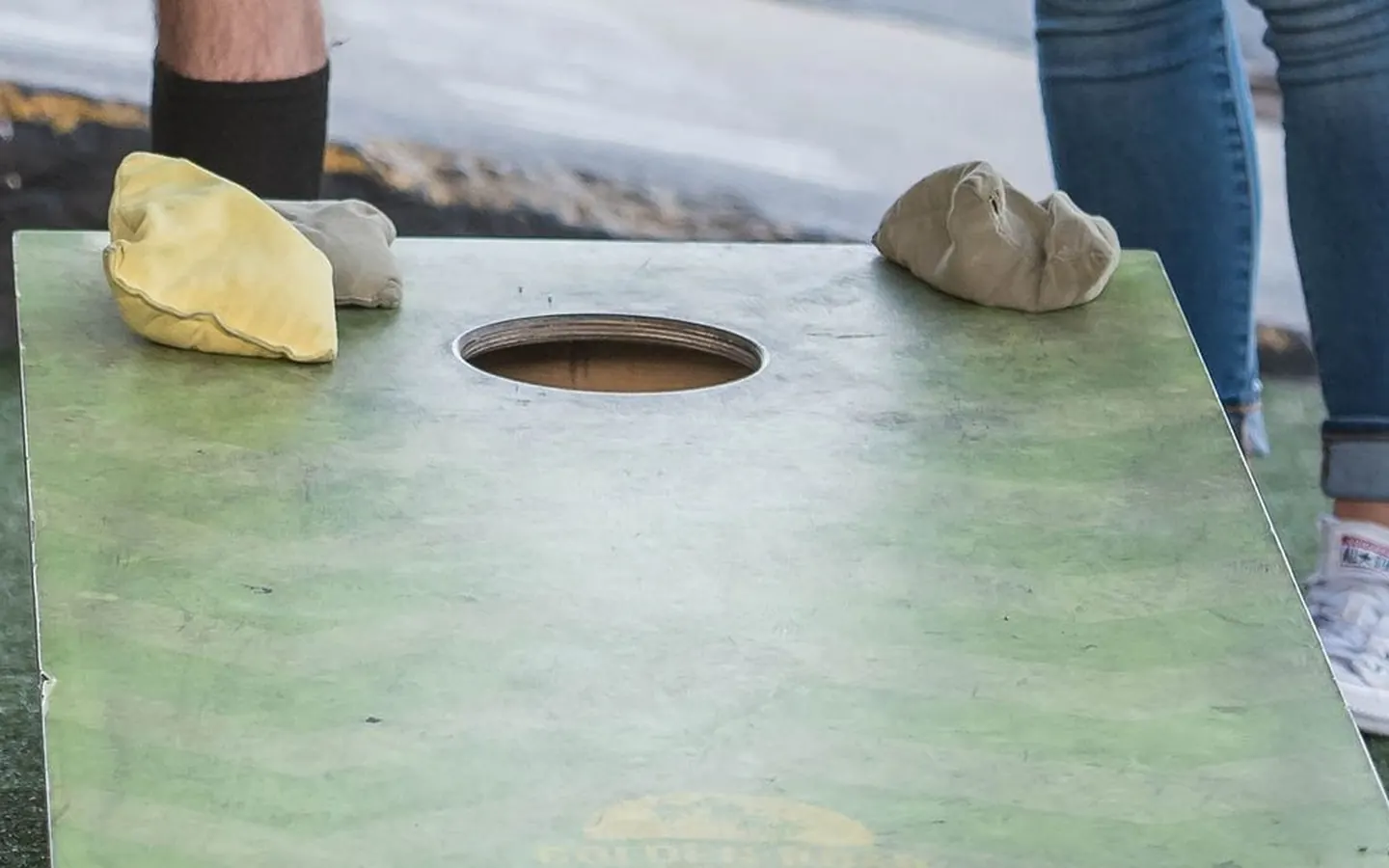
What makes a board fast
Surface friction comes from how the plywood was sealed and topcoated. Grain that has been filled and sanded flat before finishing produces a much slicker top than a surface where the grain telegraphs through the paint.
Finish, wear, temperature, moisture and bag fabric all affect slide. Use a short warm-up on the actual boards to judge pace rather than predicting it from the finish label.
| Surface state | How bags behave | Adjustment |
|---|---|---|
| Filled grain, multiple clear coats | Long slides, bags carry to the hole | Land bags shorter |
| Painted with visible grain | Bags grip and stop sooner | Land bags further up the board |
| Vinyl wrapped | Uniform, varies by vinyl and sealer | Warm up before trusting a slide shot |
| Damp with dew | Slower and less predictable | Wipe down, favor spot landings |
| Dusty or pollen covered | Inconsistent between throws | Wipe both boards between rounds |
| Worn through near the hole | Fast on the worn patch, slow elsewhere | Refinish both boards together |
Conditions change speed
Humidity, dew, and temperature all shift how a board plays over the course of an evening. A board that ran fast at midday can grab noticeably once moisture settles on it.
Dust, pollen, and grass clippings also slow a surface. Wiping boards down between rounds is a small habit that keeps the surface behaving the same way it did when you calibrated your throw.
Adjusting to unfamiliar boards
Use warm-up throws to find where a bag stops rather than aiming at the hole. Landing three bags on the same spot tells you how far each one travels, which is the information you actually need.
On fast boards, land bags shorter and let the surface carry them. On slow boards, land bags further up and accept that slide shots will not travel as far as they do at home.
Keeping a pair matched
Two boards in a lane should have the same finish. A mismatched pair means every other round plays differently, which makes it hard to tell technique errors from equipment differences.
Boards can be refinished when the surface wears through around the hole and the landing zone. Sanding back and recoating both boards at the same time keeps them matched.
A few common questions
Can I make my board faster without refinishing it?
Cleaning the surface removes dust and residue and restores some slide, but a genuine change in speed comes from the finish itself. Avoid adding wax or spray polish to boards used in organized play, since event rules can prohibit surface treatments.
Do rules specify how slick a board can be?
The published dimensional rules cover size, height, and hole placement rather than surface friction. Event organizers set expectations for the boards used at their events, so check with them if you are supplying boards.